Types of recovery truck
When you ring a recovery agent they’ll talk about flatbeds, underlifts and the rest. Here’s what those trucks actually do — and what to mention so they send the right one.
You don’t need to pick a truck type yourself. Describe what’s wrong with the car and where it is. Use this page if you want to understand what they’re offering, or if you’ve already been told you need a flatbed.
Flatbed / slidebed
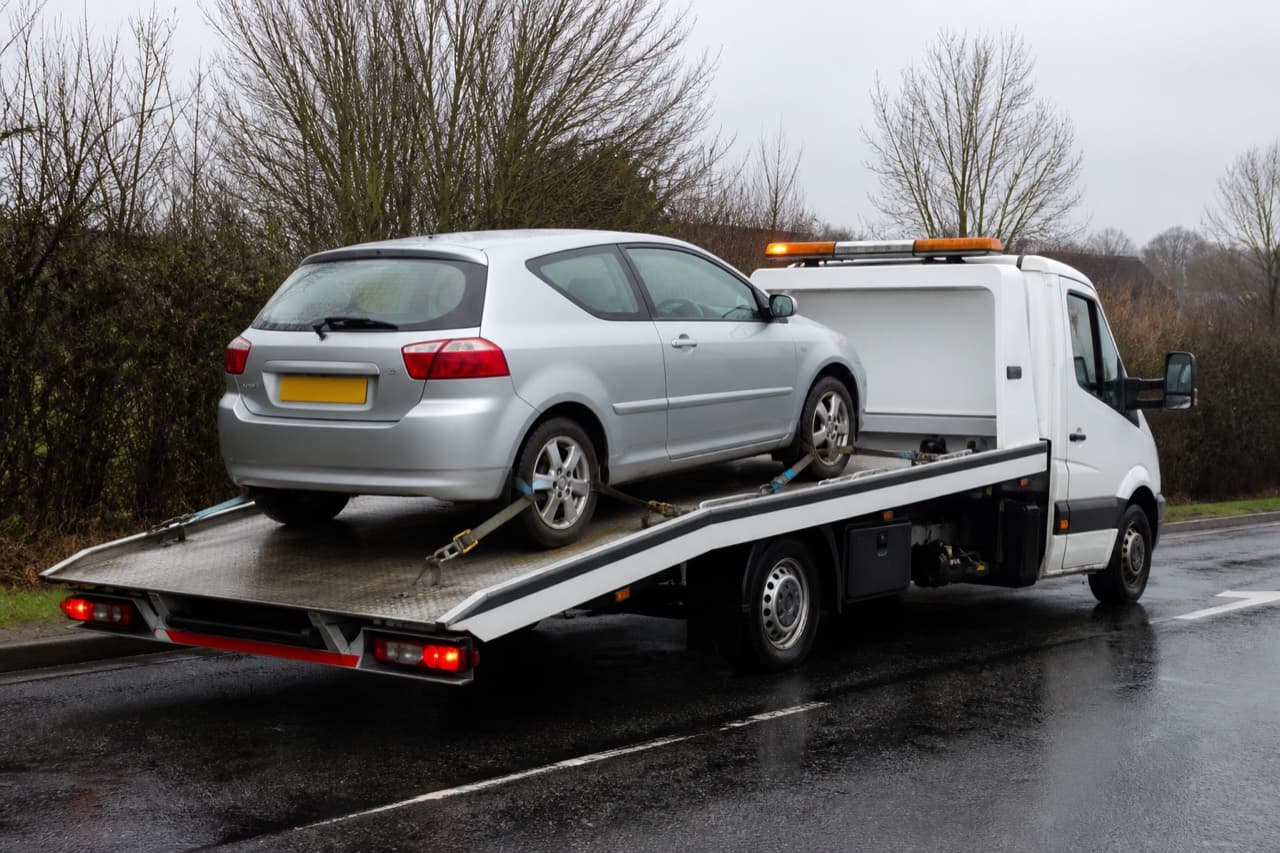
Also called: Low-loader, beaver-tail, slideback
The car is winched or driven onto a flat deck, then carried fully loaded. Nothing has to roll on its own wheels once it’s up.
Best for: Low sports cars, locked wheels, seized brakes, accident damage, missing keys, and anything that shouldn’t be dragged.
Watch outs: Needs space to tilt and load. Tight terraces, height barriers and soft ground can stop some flatbeds — say so on the call.
Underlift
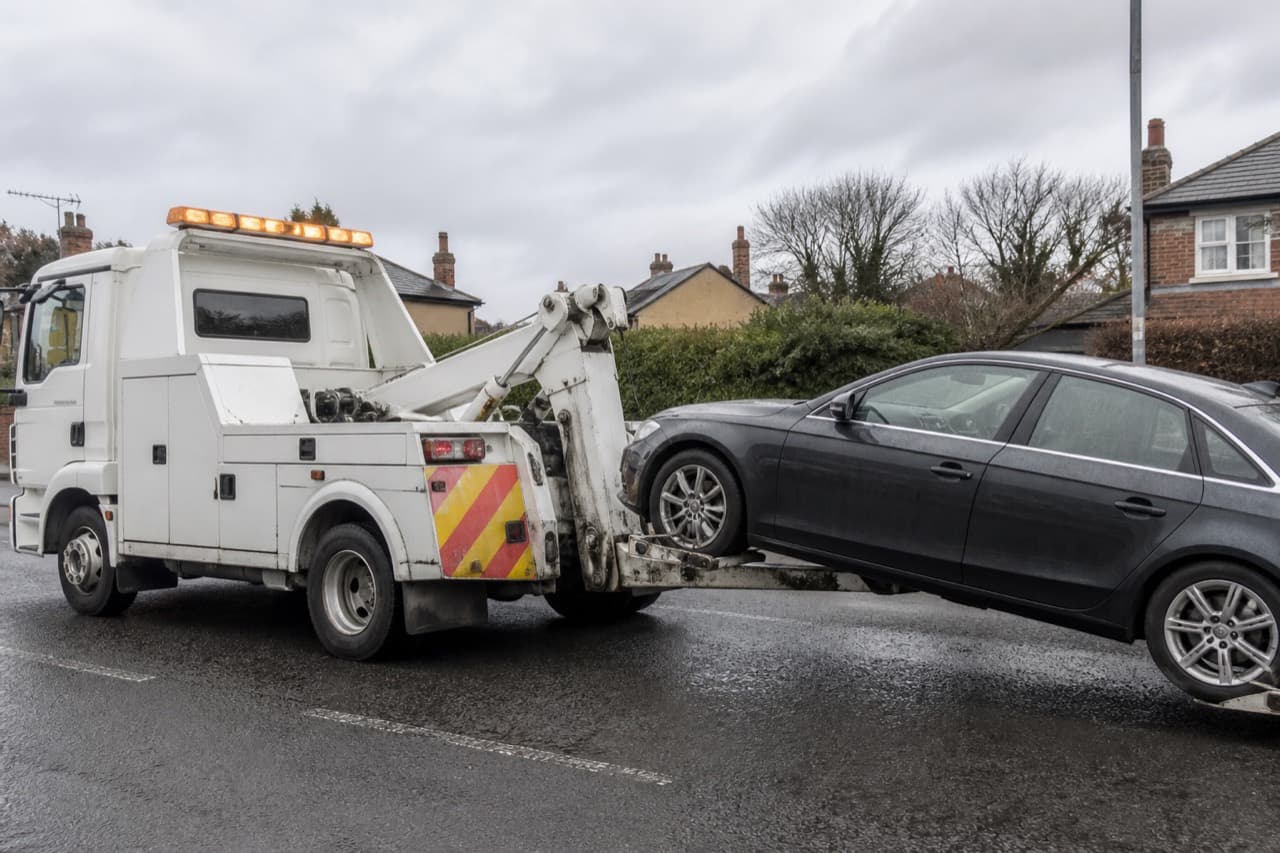
Also called: Spectacle lift, under-reach
Arms go under the car and lift one end so the other end rolls on its own wheels. Quicker and lighter than a full flatbed for many jobs.
Best for: Most everyday cars that still roll freely, short local moves, and jobs where access is tight for a long slidebed.
Watch outs: Not ideal if wheels are locked, the gearbox won’t go into neutral, ride height is very low, or bodywork is too smashed to lift safely.
Wheel-lift / dollies
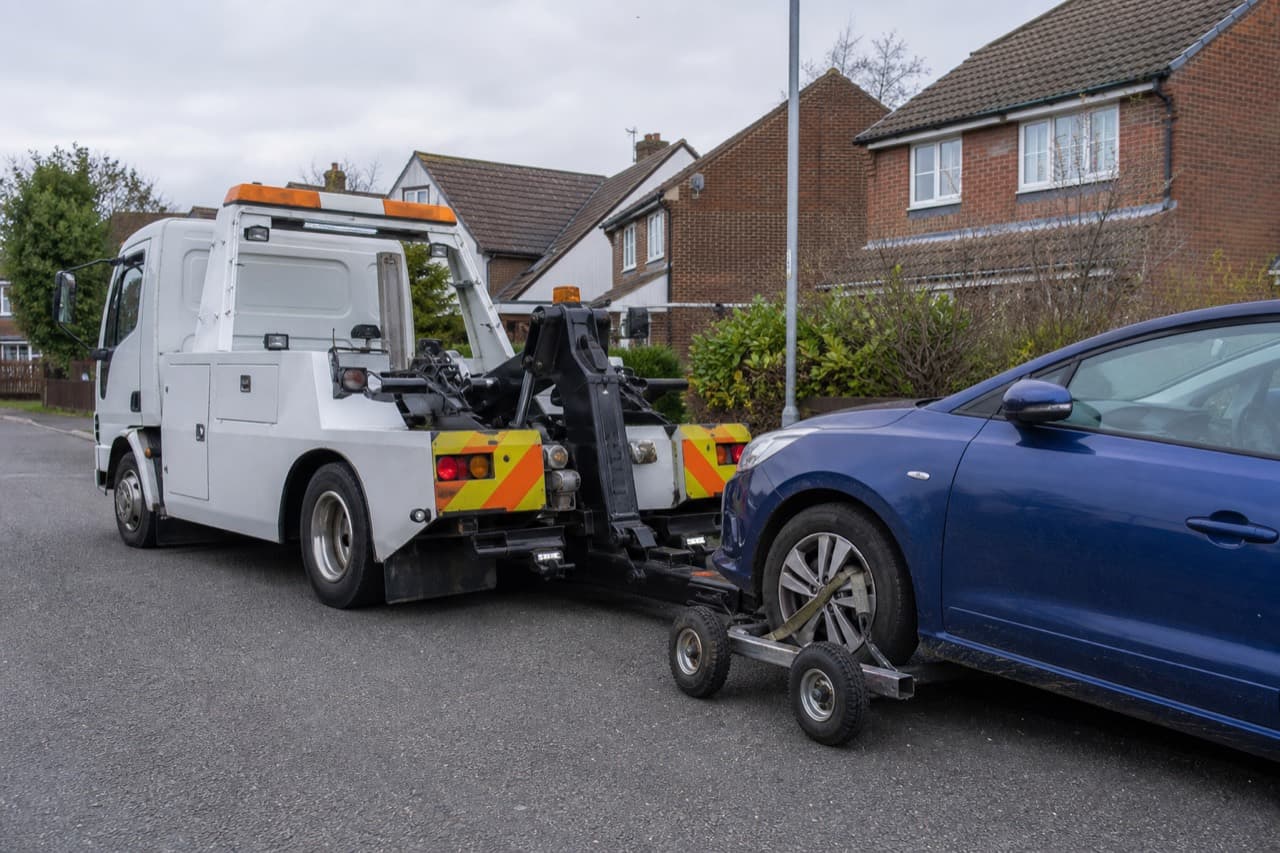
The truck lifts at the wheels, or uses dollies under locked wheels so a car can still be moved without a full flatbed.
Best for: Cars that won’t roll onto an underlift cleanly, or short recoveries where a flatbed isn’t available.
Watch outs: Ask how they’ll move locked wheels. Some setups aren’t right for AWD or badly damaged hubs — the agent will say if they need a flatbed instead.
Light recovery / service van
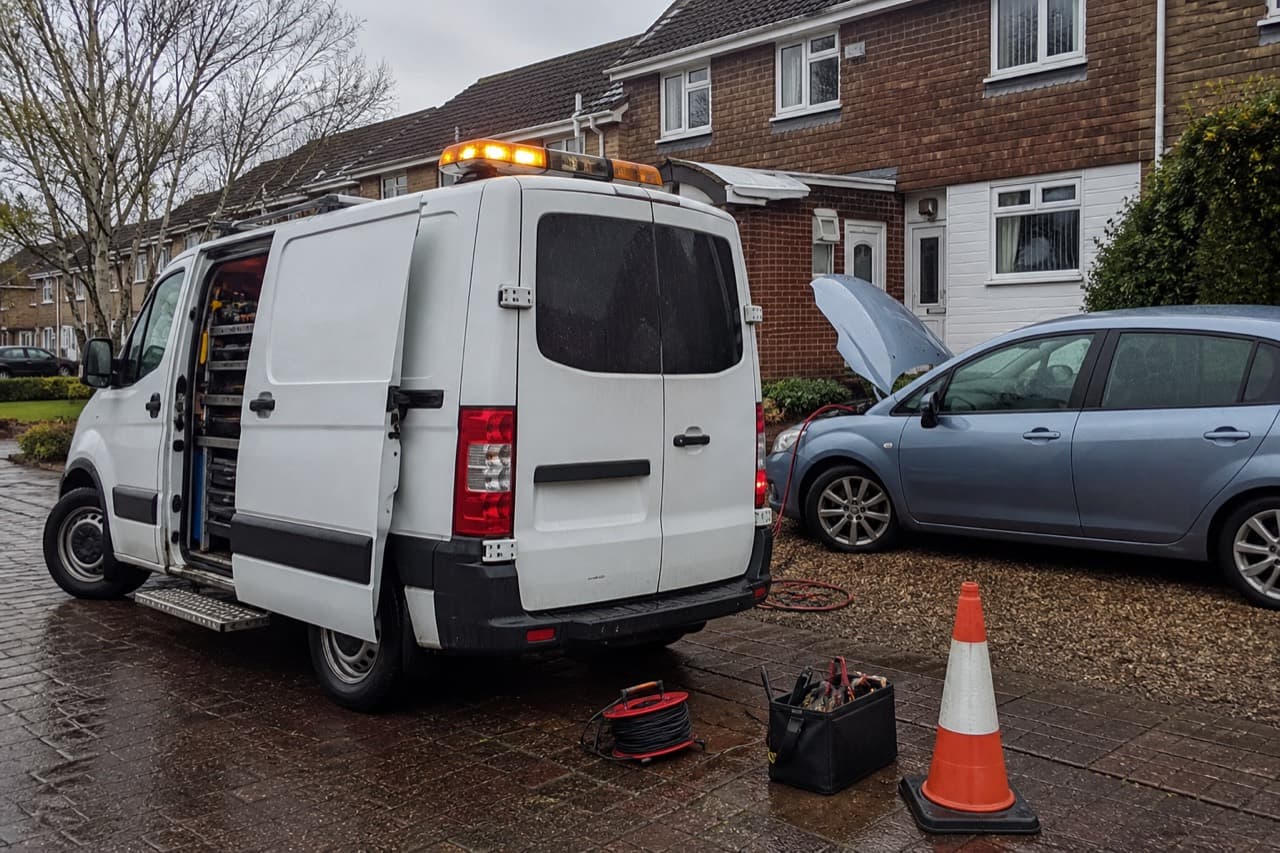
Smaller trucks or vans set up for jump starts, tyre changes, fuel and short assists. Some can do a light tow; many can’t take a smashed car.
Best for: Flat batteries, punctures, lockouts and “won’t start” jobs where the car might drive away afterwards.
Watch outs: If the car definitely needs a tow, say that up front so you don’t get a van that can only jump-start.
Heavy recovery
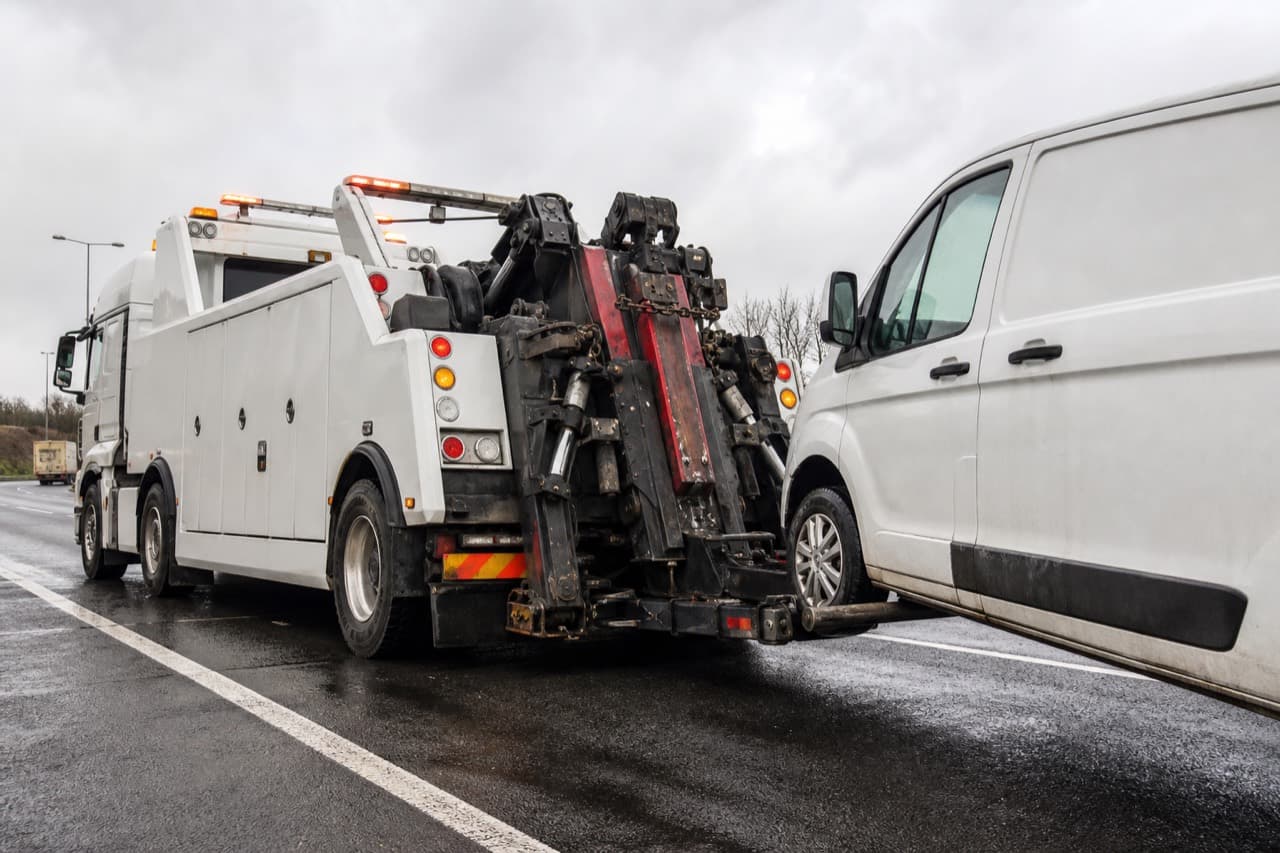
Also called: Spec lift for vans, rotators on bigger jobs
Heavier kit for vans, light commercials, or awkward recoveries where a standard car truck isn’t enough. Rotators and specialist gear turn up on the bigger scenes.
Best for: Loaded vans, larger vehicles, and jobs that need more winch capacity or a different approach.
Watch outs: Say it’s a van (and rough weight) when you call. Not every listing on this site is set up for heavy work.
What to say on the call
Make and model, whether it rolls, gearbox type if you know it, height barriers or narrow streets, and whether you’re on a driveway, car park or motorway. Agree the price and destination before they leave.
Questions
Do I need to know the truck type before I call?
No. Describe the car and the problem — locked wheels, low ride height, accident damage, motorway hard shoulder — and the agent will say what they’re sending.
Why does the truck type change the price?
Flatbeds and heavy kit cost more to run and sometimes take longer to load. Short underlift jobs are often cheaper. Always agree the price before they set off.
Can every agent bring every truck?
No. Independents run different fleets. If the first agent can’t cover it, try the next closest listing or search again with a full postcode.
Related services
Ready to call someone? Search by postcode or browse local directories.